
TL;DR – Retractable Awning FAQs
- Retractable awnings can be mounted in multiple locations – walls, soffits, fascia, or roofs depending on your home design.
- Pitched awnings perform better than flat ones – they shed rain, resist wind, and provide better shade.
- Lateral arm awnings cover larger spaces – ideal for patios and decks, while drop arm awnings work better for windows and doors.
- Smart sensors automate awning operation – sun, wind, and temperature sensors adjust your awning automatically.
- Awnings improve comfort and usability – they reduce heat, block UV rays, and extend your outdoor living space.
As outdoor temperatures rise, adding a retractable awning to your patio or deck can turn an underused space into a comfortable extension of your home. These systems provide shade, reduce heat, and protect against UV exposure.
If you are considering installing one, here are answers to some of the most common questions homeowners have about retractable awnings.
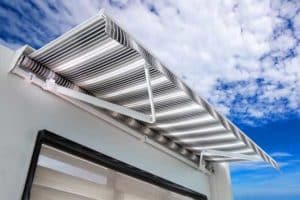
Where Can an Awning Be Mounted?
Retractable awnings offer flexible mounting options depending on your home’s structure. They can be installed on exterior walls, roof fascia, soffits, or even directly onto the roof.
For optimal performance, awnings are typically mounted at least 8 feet above the ground. Larger awnings with greater projection may need to be installed higher to maintain proper clearance and functionality.
Should My Awning Be Flat or Pitched?
While flat awnings are available, pitched awnings are generally the better option for most homes. A slight slope allows rainwater to run off instead of pooling on the fabric.
Pitched awnings are also more resistant to wind uplift and provide more effective shade during sunny conditions. The recommended minimum pitch is about 3.5 inches for every 12 inches of projection.
Most retractable awnings allow you to adjust the pitch after installation, giving you flexibility based on weather conditions and personal preference.
How Do Lateral Arm and Drop Arm Awnings Differ?
Two of the most common types of retractable awnings are drop arm and lateral arm designs, and each serves a different purpose.
Drop arm awnings use spring-loaded arms and are typically smaller, making them ideal for shading windows and doors.
Lateral arm awnings use tension arms and torsion bars, allowing them to extend further and support larger coverage areas. This makes them a better choice for patios, decks, and outdoor living spaces.
Both styles are available in manual (hand crank) and motorized options.
How Do Awning Sensors Work?
Modern retractable awnings can be equipped with sensors that automatically adjust the awning based on environmental conditions.
- Sun sensors – extend the awning when sunlight becomes too intense.
- Wind sensors – retract the awning when wind speeds become too strong.
- Temperature sensors – extend the awning when indoor temperatures rise.
- Daylight sensors – open at sunrise and retract at sunset.
While these sensors are optional, they make awning operation easier and help protect your investment from weather-related damage.
If you are considering adding a retractable awning to your patio, porch, or deck, these features can help you choose the right system for your home. Contact the experts at Shank Door to schedule residential retractable awning installation today.