
DIY vs Professional Garage Door Repair: What’s Safe to Do Yourself—and What Isn’t
Your garage door is acting up, and you’re torn between DIY and professional garage door repair. Do you fix it yourself or call in a pro?
We’ve all been there—Googling quick fixes, watching a video, thinking, “Maybe it’s just the rollers.” But then you remember the other side of the choice: high tension, heavy parts, and the risk of turning a small issue into a costly failure. You want to save money. You also want to keep your family safe and your day on track. That’s the tension.
It’s why homeowners in Myerstown and surrounding Central PA communities lean on Shank Door. Our certified technicians find the real problem, fix it right the first time, and set your system for quiet, reliable operation—without the guesswork or risk.
Ready to feel confident? Let’s clarify what you can safely handle at home—and what’s best left to a pro.
Table of Contents








TL;DR – DIY vs Professional Garage Door Repair
DIY is great for simple maintenance—cleaning tracks, lubricating hinges and rollers, checking weather seals, and testing safety sensors—but springs, cables, tracks, panels, opener internals, and counterbalance belong to a pro. Professional repairs save money over time with accurate diagnosis, correct parts and torque, safety calibration, and warranty support, while protecting curb appeal and resale value. In Central PA, Shank Door delivers fast, safe, long-lasting repairs with clear pricing.
DIY vs Professional: Why This Decision Matters
Choosing between doing it yourself and hiring a pro directly impacts your safety, your wallet, and how long your garage door lasts. Even “small” garage door issues can hide bigger problems. What sounds like a squeak might be a failing roller, and a slow opener could mean the door is out of balance.
The real divide between DIY and pro repairs comes down to tension, weight, and diagnostics. Garage doors often weigh 150–400 pounds. Sometimes more. Torsion springs store serious energy. Bad alignment stresses every part. A misdiagnosis can turn a $50 fix into a $500 problem, and some warranties and insurance companies require professional service to stay valid.
There’s another factor to consider—curb appeal and resale value. A door that’s properly repaired, balanced, and quiet doesn’t just work better—it looks better and signals to buyers that the home’s been maintained.
Let’s take a look at a simple list of DIY-friendly tasks that keep your door running smoothly.
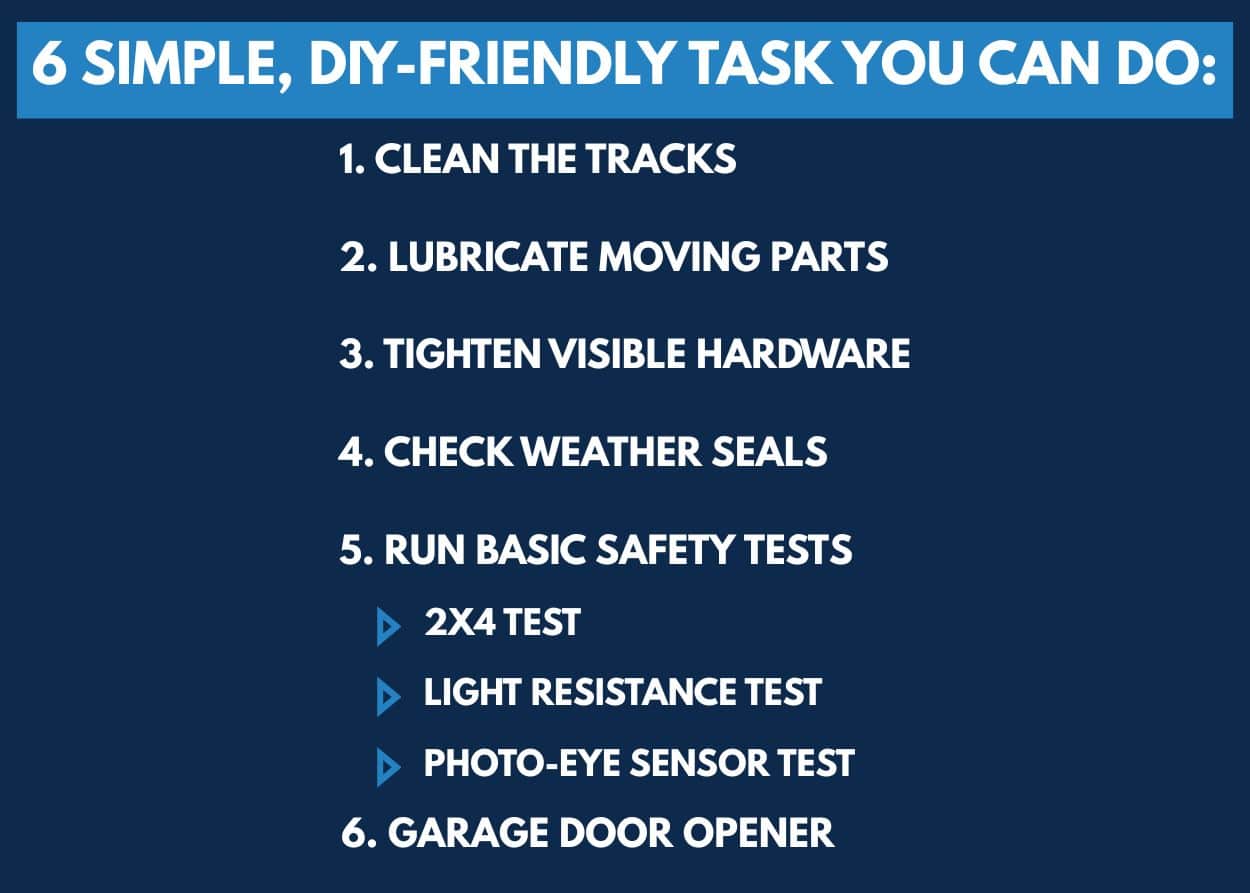
6 Simple, DIY-Friendly Tasks You Can Do
These are low-risk jobs that improve performance without touching springs, cables, or motor internals. Move slowly. Use common sense. If something feels unsafe, stop.
- Clean the tracks.
Wipe dust and light debris with a dry cloth. Don’t bend, oil, or “realign” tracks yourself.
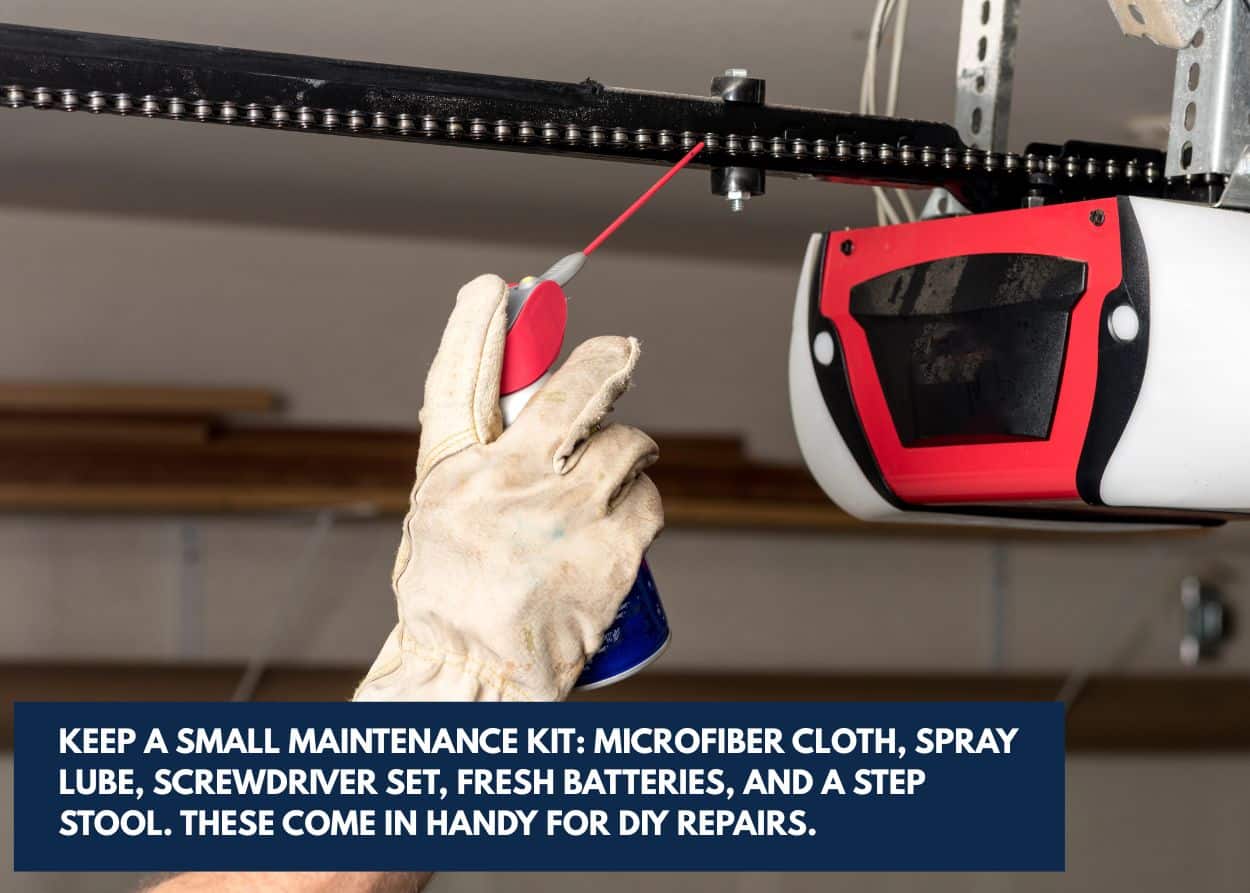
- Lubricate moving parts.
Use a garage-door-safe spray lube on metal hinges, metal rollers, and springs. Never grease the tracks. - Tighten visible hardware.
Snug hinge screws and bracket bolts. Skip anything attached to the spring shaft or set screws.
- Check weather seals.
Look for cracks, gaps, or daylight. Replace the bottom rubber or perimeter seals if worn.
- Run basic safety tests.
- 2×4 test: Place a 2×4 flat on the floor under the door. The closing door should reverse on contact.
- Light resistance test: While closing, apply light upward pressure—door should auto-reverse.
- Photo-eye sensor test: With the door open, wave a broom through the sensor beam as you press “close.” The door should not move—or it should immediately reverse. If it doesn’t, clean the sensor lenses, make sure both LEDs are solid (not blinking), and adjust alignment until they are. Sensors should be mounted about 4–6 inches above the floor and aimed directly at each other. If the door still won’t respond correctly after cleaning and aligning, call a pro.
- Garage Door Opener.
Replace remote batteries. Reprogram keypad codes. Verify Wi-Fi connection and app controls (if equipped).
Quick tip: Keep a small maintenance kit: microfiber cloth, spray lube, screwdriver set, fresh batteries, and a step stool. These come in handy for DIY repairs.
8 Garage Door Repairs That Require a Professional
If a repair involves stored energy, counterbalance, structural alignment, or electrical internals, call a professional. No exceptions.
- Torsion or extension spring replacement
Why it’s risky: Springs store enough energy to cause severe injury. Incorrect handling can cause the spring to snap with force. It requires precise measurement of wire size, length, and torque to avoid dangerous malfunctions or injury. - Cable repair or replacement
Why it’s risky: Cables bear the door’s full weight. Wrong length or tension? The door can drop.
- Track realignment or replacement
Why it’s risky: Improperly aligned tracks can cause the door to derail, fall off, or jam. This can lead to panel damage, stress on the framing, and the risk of the door falling unexpectedly during use.
- Panel replacement and structural repairs
Why it’s risky: Panels are heavy, and incorrect hinge or hardware placement affects how the entire door moves. Incorrect repairs cause the door to bind, wear out parts early, or unexpectedly collapse during operation. - Opener motor/gear assembly work
Why it’s risky: Electrical hazards and incorrect force limits can damage the door or injure someone.
- Roller replacement on torsion systems
Why it’s risky: Replacing rollers on torsion systems means working near high-tension springs. A slip can accidentally release stored energy or cause the system to engage, resulting in sudden injury or damage to the door. - Counterbalance adjustments
Why it’s risky: Requires precise torque and balance. Misadjustment strains the opener and panels.
- Door rehanging or conversions (extension → torsion)
Why it’s risky: Needs load calculations, correct parts, and a trained setup process.
The Real Dangers of DIY Garage Door Repairs
Here’s the truth: garage doors don’t forgive mistakes. Injuries happen from a spring kickback or a falling door. Property damage follows—bent panels, dented cars, and cracked drywall. Hidden faults linger when you fix the noise but miss the cause. You may void warranties, and insurance issues can crop up if a DIY attempt goes wrong.
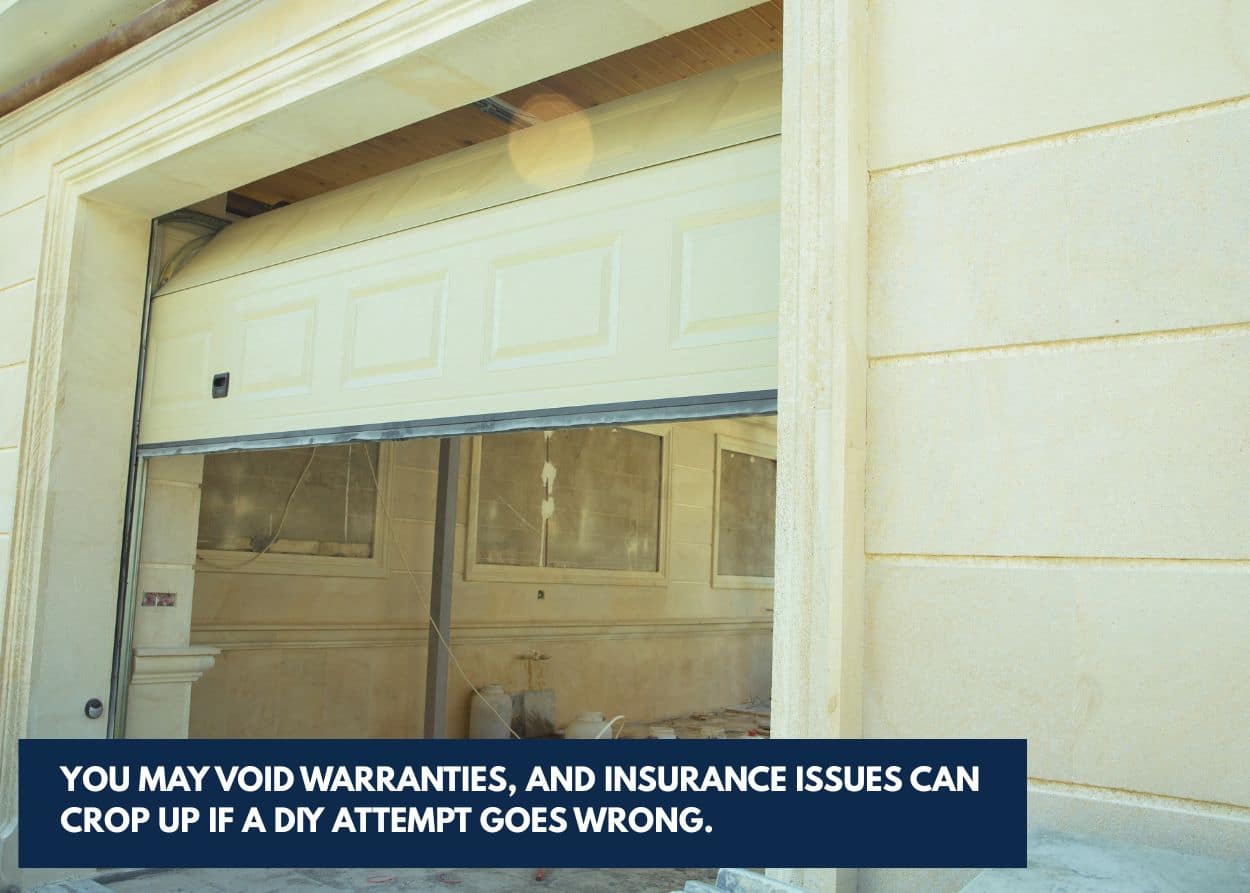
Worst of all, repeat failures are common when tension or alignment isn’t set precisely, shortening the life of every component. Think of it like aligning your car’s wheels: you could try to eyeball it, but the uneven tire wear—and the added risk—will show up down the road.
Why Professional Repairs Save Money Over Time
DIY seems cheaper—until it isn’t. Professional service delivers accuracy and longevity.
- Accurate diagnosis. Fix the root cause, not just the symptom. A pro can also tell you when it’s better to replace your door rather than repair it.
- Correct parts + proper torque. Less strain. Longer hardware life.
- Calibrated safety settings. Force, travel, and photo-eyes set to spec.
- Warranty coverage. Parts and labor you can lean on.
- Preventative maintenance. Small tweaks now avoid big failures later.
- Fewer callbacks. One visit. Done right.
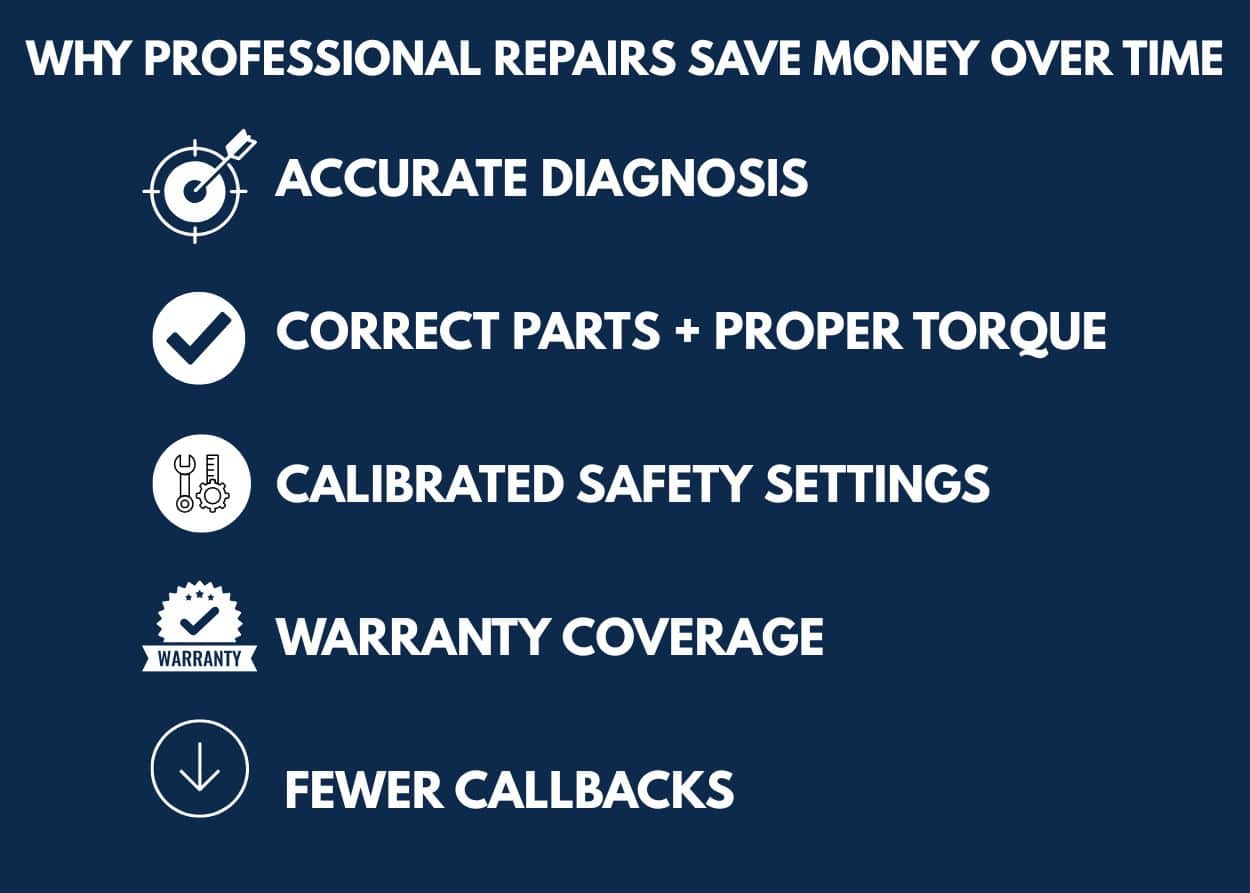
Result: fewer breakdowns, fewer surprises, and a safer, quieter door.
DIY Safety Checklist
If you’re doing basic maintenance, keep it safe and simple.
- Safety glasses and gloves
- Sturdy step stool or ladder
- Garage-door-safe spray lube
- Microfiber cloths
- Fresh remote batteries
- Phone within reach (just in case)
Never: loosen set screws, wind/unwind springs, remove cables, or open the motor housing.
Signs You Need a Pro—Today
Don’t wait on these. They go from bad to worse quickly.
- Loud bang from the garage (often a broken spring)
- Crooked or jerky door travel
- Frayed or loose cables
- Grinding, smoking, or burning smell from the opener
- The door won’t stay half open when released
- Panels bow or flex while moving
If you see one of these problems, stop using the door and contact us right away.
Closing: Make the Safe Choice
DIY has its place, but don’t risk injury or a bigger repair bill. Handle the simple maintenance yourself—and leave the high-tension work to certified pros.
When you want safety, reliability, and repairs that last, call Shank Door. We’ll get your garage door working the way it should, and you’ll get a smoother, quieter door—and best of all—peace of mind.
Shank Door is located in Myerstown and proudly serves Central PA—including Lancaster, Lebanon, Reading, Harrisburg, York, and nearby communities.
Ready to schedule? Contact us today for expert garage door repair and maintenance.