
TL;DR – 6 Ways Lightning Can Damage Your Garage Door System
- Lightning can scorch, dent, or physically damage the garage door surface and hardware.
- Shockwaves may crack or shatter garage door windows.
- Power surges from indirect strikes often destroy opener circuitry.
- Electrical wiring inside the opener can overheat, melt, or burn.
- Opener systems may behave erratically after partial electrical damage.
- Remote controls and wall controls may fail if receivers or wiring are fried.
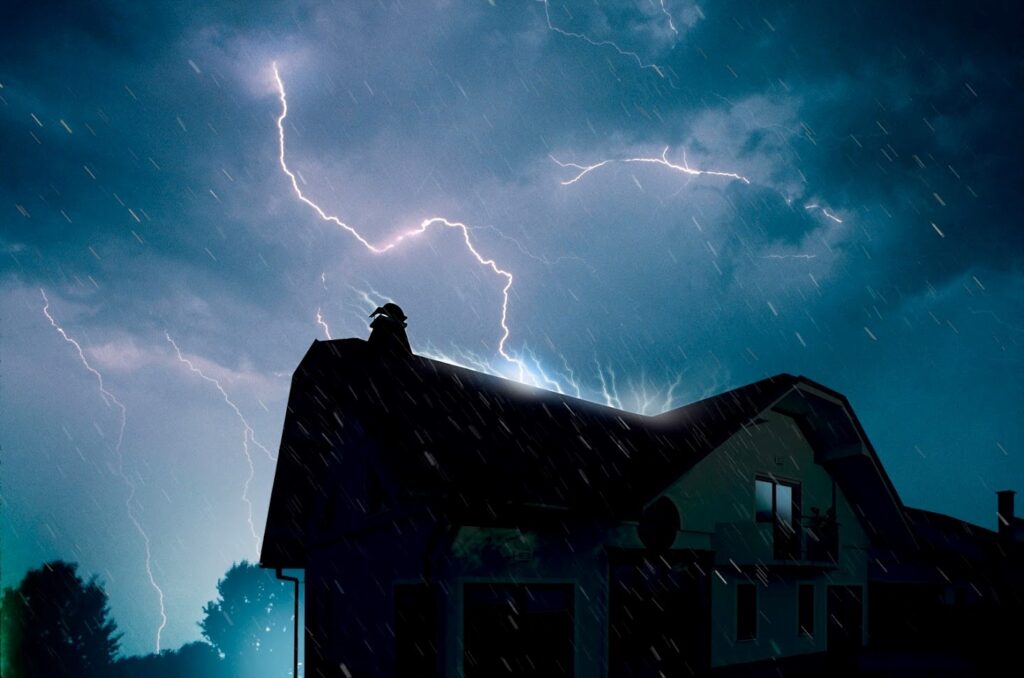
Lightning may not be as visibly destructive as hurricanes or tornadoes, but it’s still incredibly powerful — and dangerous. The U.S. sees more than 25 million cloud-to-ground strikes annually, and just one of those bolts can cause serious damage to your home, including your garage door system.
While a direct hit is the most obvious threat, indirect lightning strikes can be just as harmful. Power surges caused by nearby strikes can damage garage door openers, sensors, wiring, and other electrical components. Below are the most common types of lightning-related damage your garage door system may experience.
Scorch Marks and Other Physical Damage
A lightning bolt can deliver up to a billion volts of electricity, and the impact can leave unmistakable damage. On metal or fiberglass garage doors, lightning may cause visible scorch marks, dents, or even burn holes. Wooden doors may suffer finish damage or, in rare cases, catch fire.
Lightning can also damage metal hardware on the door. The intense electrical current may fuse hinges, brackets, or other components together, making it impossible to open the door without professional assistance.
Broken Windows
Windows add beauty and light to a garage door, but they’re vulnerable during storms. A lightning strike nearby can crack window frames, loosen panes, or shatter glass entirely. The shockwave alone — even without a direct hit — is strong enough to break windows on or near the garage door.
Damaged Circuitry
The most serious lightning damage often happens where you can’t see it: inside the garage door opener. Power surges from indirect strikes can instantly overwhelm sensitive electronics, destroying circuit boards, capacitors, transistors, and other internal components.
Without proper surge protection at the outlet or breaker panel, your opener remains vulnerable to electrical spikes during storms.
Burnt or Melted Wiring
Lightning may also damage wiring throughout the system. As electricity seeks a path to the ground, it can travel through your home’s electrical wiring — including the wiring inside your garage door opener. These surges can overheat and melt wires, causing the opener to fail and creating potential fire hazards.
Erratic Operation
Sometimes lightning doesn’t kill the opener entirely — it just damages it enough to cause unpredictable behavior. You may find your garage door opening or closing without being prompted, or refusing to operate consistently.
Even LED indicator lights can malfunction, flashing out of order or showing incorrect status messages.
Controls That Fail to Respond
Lightning damage may also fry the opener’s receiver, preventing remote controls from working. Hardwired buttons and wall controls can also fail if internal wiring or circuit traces have been damaged, leaving you with only manual operation until repairs are made.
Although the chance of being struck by lightning is low, the risk to your home is far higher — around one in 200 homes each year. If lightning knocks out your garage door system, the experts at Shank Door can help diagnose and repair the damage. Contact us today to schedule service or learn more.
Trackback from your site.