
How to Find a Trustworthy Garage Door Company (And Avoid Scams!)
Your front door is one of the first things your guests notice as they walk up the sidewalk and step onto the porch. If your door is faded, dented, or just outdated, it can make even a well-kept home feel neglected before anyone even rings the doorbell. When it comes to steel vs. fiberglass entry doors, both are popular, practical choices for homeowners who want durability and low maintenance without sacrificing style.
Here is the good news: both materials are excellent choices, and neither one is a bad option. The real question is which one fits your home, your budget, and your day-to-day life. Shank Door has installed both materials for decades throughout Berks, Lancaster, Lebanon, and the surrounding counties, so we have seen how each one holds up in real Pennsylvania weather.
Let's walk through how they compare, so you can make a confident decision.
Table of Contents
TL;DR – Steel vs. Fiberglass Entry Doors: Which Is Better?
- Steel and fiberglass are both durable, popular choices for entry doors.
- Steel offers superior security and the strongest resale value, but can dent and may need touch-up paint over time.
- Fiberglass resists dents, warping, and rust, and can be textured to mimic real wood grain.
- Both materials typically fall in the R-5 to R-6 insulation range and qualify for ENERGY STAR certification.
- Steel tends to cost less upfront, while fiberglass often costs more, especially with premium wood-look finishes.
- The right choice depends on your budget, climate exposure, and how long you plan to stay in your home.
How Steel and Fiberglass Doors Are Built
Before comparing performance, it helps to know what you are actually looking at. Both steel and fiberglass entry doors are built in layers rather than as one solid material. Most have a foam insulating core in the middle, wrapped by an outer shell.
The difference comes down to that shell. A steel door has a shell made of galvanized steel while a fiberglass door has a shell made of compression-molded fiberglass, which can be textured to look like real wood grain. That single difference in the outer layer shapes almost everything else on this list, from durability to style.
Durability and Security
When it comes to strength, both materials perform well, but they hold up differently over time.
Steel doors are known for their strength and offer superior security, giving homeowners real peace of mind. However, steel can dent if it takes a hard hit, and a dent is tough to repair without replacing a panel. Fiberglass doors resist denting and will not warp, crack, or rot, making them a strong long-term choice for busy entryways.
Here’s a quick breakdown:
- Steel: Very secure, resists break-ins well, but can dent from impact
- Fiberglass: Resists dents and warping, holds its shape for decades
- Both: Can be paired with multi-point locking systems and deadbolts for added security
If security is your top priority, either material works well when paired with strong hardware. We offer both keyed handles and multi-point locking systems on our entry doors, so the door itself is only part of the equation.
It is also worth thinking about how each material ages in your specific setting. If you're near Northern Maryland, or anywhere road salt is common in winter, steel doors may show wear a little sooner if the paint gets chipped, since exposed metal can corrode over time. Fiberglass does not have that vulnerability, since there is no bare metal underneath to protect.
Energy Efficiency
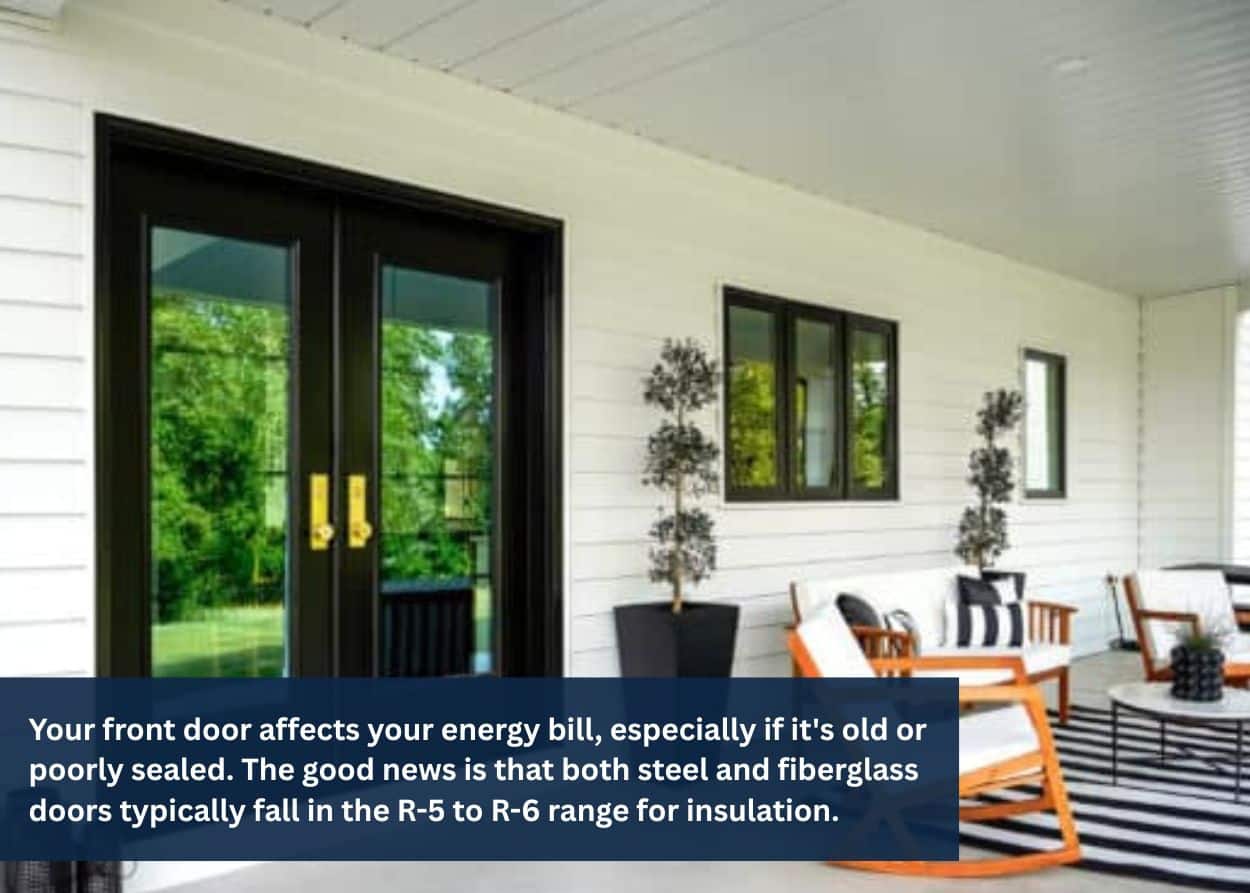
Your front door affects your energy bill, especially if it's old or poorly sealed. The good news is that both steel and fiberglass doors typically fall in the R-5 to R-6 range for insulation. Fiberglass has a slight edge here because the material itself does not conduct heat as easily as metal, so it stays a bit cooler to the touch on hot, sunny days.
Both materials qualify for ENERGY STAR certification when paired with the right glass and weatherstripping. So rather than choosing based on material alone, it’s worth asking about the specific door's energy rating.
Maintenance Requirements
Nobody wants a front door that becomes a chore. Thankfully, both steel and fiberglass are considered low maintenance compared to a traditional wood door.
Steel doors hold up well over time, though any scratch or chip in the paint should be touched up promptly to prevent rust from forming underneath. Fiberglass does not rust or corrode, so it tends to need even less attention over the years. A simple wipe down is usually all it takes to keep either one looking sharp.
Appearance and Style Options
This is where personal taste really comes into play. Steel doors are a great fit for homeowners who like a smooth, clean, painted finish. They come in a wide range of colors and panel styles.
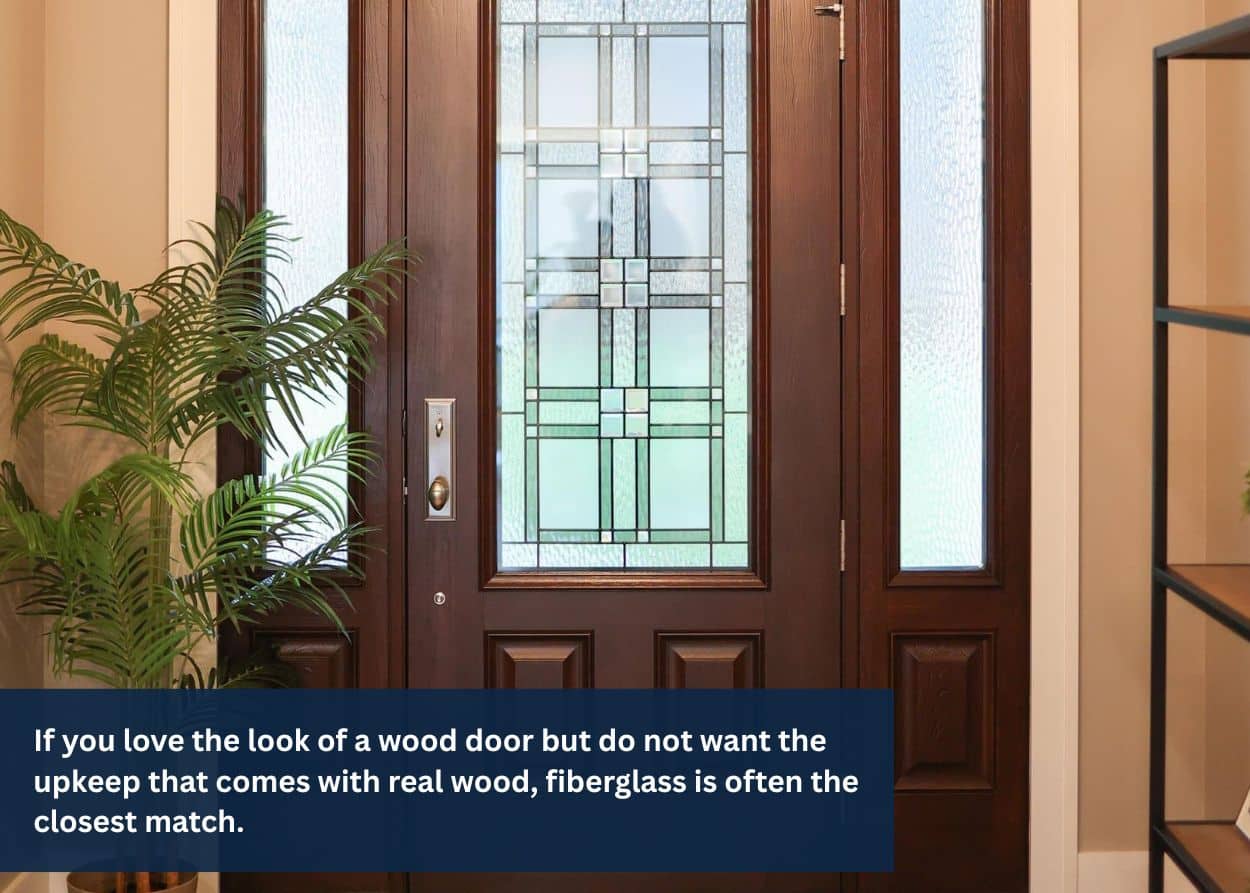
Fiberglass doors, on the other hand, can be textured to mimic real wood grain, right down to the look and feel of oak or cherry. If you love the look of a wood door but do not want the upkeep that comes with real wood, fiberglass is often the closest match. Both materials can be customized with glass inserts, finishes, and hardware to match your home's style.
Overall Cost and Long-Term Value
Steel doors usually cost less upfront, especially in simpler styles without decorative glass. Fiberglass doors, particularly those with premium wood-look finishes, tend to cost more upfront.
When it comes to resale value, steel has a strong track record. According to the Journal of Light Construction's 2025 Cost vs. Value Report, a steel entry door replacement recouped nearly 220 percent of its cost nationally, making it one of the highest-return home improvement projects tracked in the report. That doesn’t mean fiberglass is a poor investment. It simply means steel tends to have a shorter payback period if resale value is your main concern.
Which Door Fits Your Home?
There is no single right answer here. It really depends on what matters most to you:
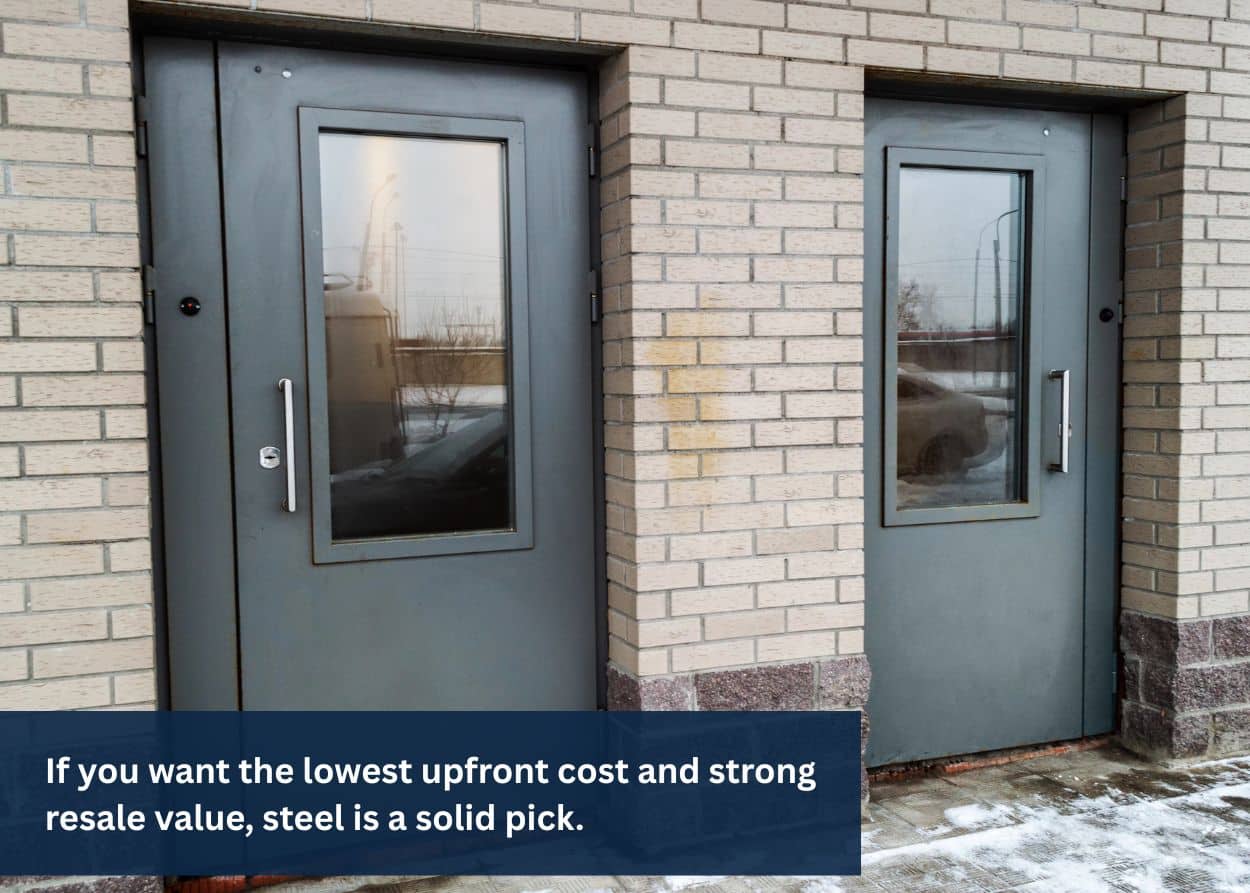
- If you want the lowest upfront cost and strong resale value, steel is a solid pick.
- If you want a wood look without the maintenance, fiberglass comes close.
- If your entry gets direct afternoon sun, fiberglass tends to stay cooler to the touch.
- If security and budget are your top concerns, steel is hard to beat.
Most homeowners find that once they know their priorities, the choice becomes much clearer.
Ready to Make Your Choice?
A new entry door does more than change how your home looks from the street. It gives you a feeling of security, shields you from the elements, and welcomes you home after a long day at work.
Both steel and fiberglass are proven, reliable materials. The right one comes down to your budget, your climate exposure, and the style you want to walk through every day.
If you are ready to see these options in person, Shank Door is here to help. We will walk you through both materials, answer your questions honestly, and help you find the door that fits your home and your life. Request your free consultation today, and let's find the right entry door for your home together.