
Garage Door Won’t Open but the Motor Runs? 6 Common Causes
Table of Contents:
You press the button. The opener hums, the light clicks on, but nothing happens. Your garage door won't open even though the motor is running. Now your car is stuck inside, and your morning just got a whole lot more complicated.
Here is the good news. That humming motor tells you something useful. Power is reaching the opener, so you can rule out dead batteries, a tripped breaker, and a bad outlet. The problem sits between the motor and the door, which narrows things down.
At Shank Door, we have been repairing garage doors across Southeast PA since 1964. That means we’ve seen it all, and you don’t need to worry about surprising us with a unique problem. Our own service crews handle every call, and emergency service is available for fixes that can’t wait.
Let's walk through what is likely going on, what you can safely check in five minutes, and when to stop and call an expert.
Table of Contents
TL;DR – Garage Door Won't Open but the Motor Runs? 6 Common Causes
When the motor runs and nothing moves, the connection between the two has broken. The likely culprits:
- The emergency release cord got pulled. Your door is in manual mode. Usually a two-minute fix.
- The plastic gear inside the opener is worn out. Wears out over years of use. Repairable.
- The chain, belt, or screw drive came apart. The trolley never gets going.
- A spring broke, or a cable snapped. Your door is now too heavy to lift. Stop using the opener.
- The door is locked or stuck. A slide lock, a bent track, or a loose roller.
- The trolley or door arm failed. Everything moves except the door.
How Your Garage Door Works
Three parts make this problem easy to figure out.
The motor is the box on your ceiling. It supplies the power.
The drive system carries that power to the door. A chain or rubber belt runs along a long metal rail on your ceiling. It pulls a small sliding block called the trolley, which connects to the top of your door with a metal arm.
The springs are the tightly wound coils above or beside your door. Here is what surprises people: the motor does not lift your garage door. The springs do. Your garage door is quite possibly the largest moving object in your home, and the springs balance nearly all of that weight.
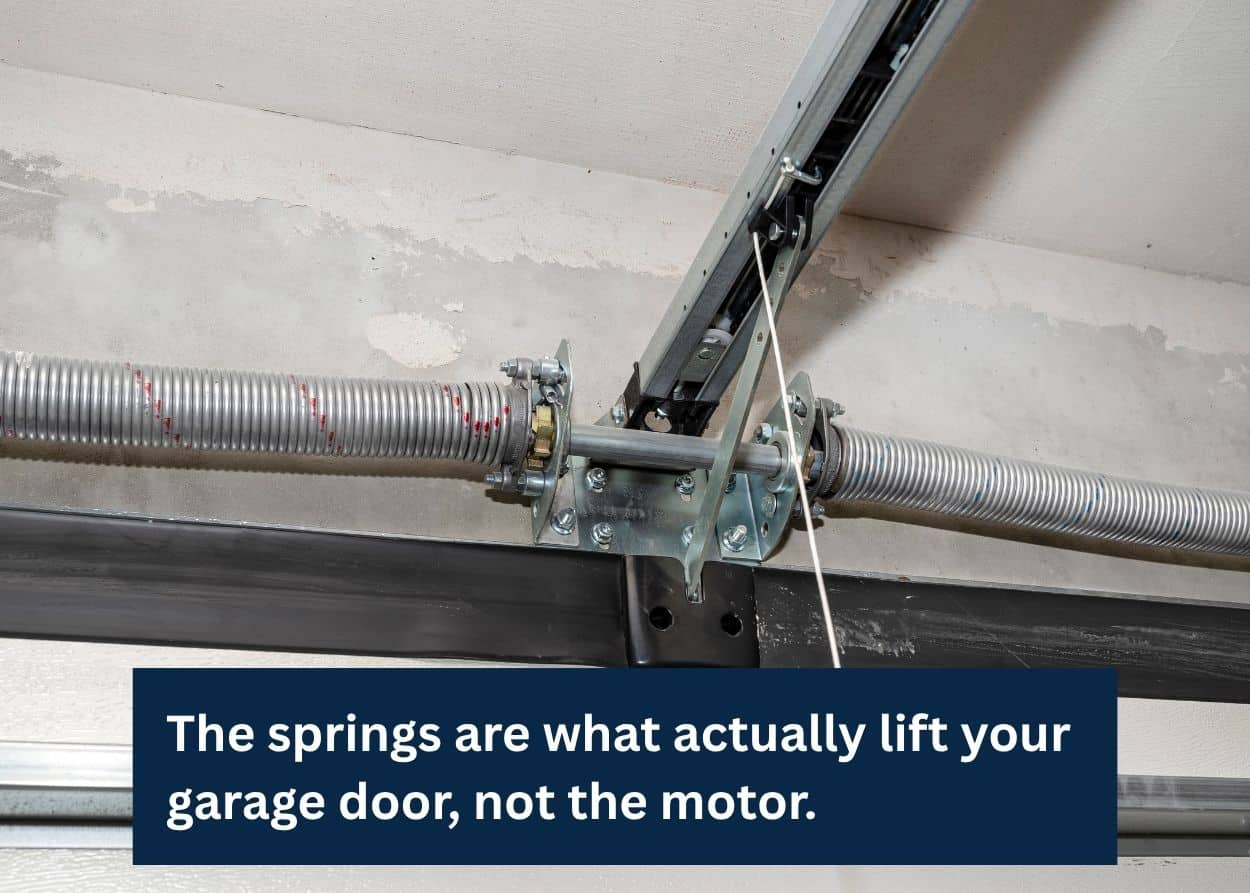
So when the motor runs and nothing moves, the break is in the drive system or the springs.
6 Reasons Your Garage Door Won't Open When the Motor Runs
1. Someone pulled the emergency release cord
This is the most common cause and the easiest to fix, so check it first.
That red cord with the handle disconnects the door from the trolley so you can lift the door by hand when the power is out. It hangs about six feet above the floor, low enough for a truck antenna, a roof rack, or a ladder to catch. It also gets pulled during a power outage and never reconnected. Once it's disengaged, the motor runs, and the trolley slides, but the door sits still.
The clue: Watch the rail while someone presses the wall button. A sliding trolley and a still door is your answer.
The fix: Close the door all the way by hand, pull the cord back toward the opener, then run the opener so the trolley clicks into place. The Genie Company notes some models want the cord pulled toward the door instead, so check your manual if the first try fails.
2. The plastic gear inside the opener is worn out
Inside the ceiling box is a white plastic gear that turns the chain or belt. Plastic runs much quieter than metal, but it also wears. Over years of use (and much faster on a door that is out of balance), the teeth give out, and the motor spins without catching anything.
The clue: A grinding or whirring sound while the motor runs. Unplug the opener, take off the cover, and you may find white plastic shavings inside.
The fix: Not a do-it-yourself job, but an inexpensive one. A technician can install a new gear kit in most cases, though on an older opener it's worth weighing repair against replacement.
3. The chain, belt, or screw drive came apart
Openers move the trolley one of three ways: a metal chain, a rubber belt, or a long threaded rod called a screw drive. Chains can slip off the sprocket, while belts wear out. On screw drives, the teeth inside the trolley strip out, usually with a loud rattling sound.
The clue: Look at the rail. A sagging chain or loose belt is easy to spot from the ground.
The fix: A slipped chain can be reset and re-tensioned, but a worn belt or a stripped screw drive trolley has to be replaced. Either way, this one is a service call.
4. A spring broke or a cable snapped
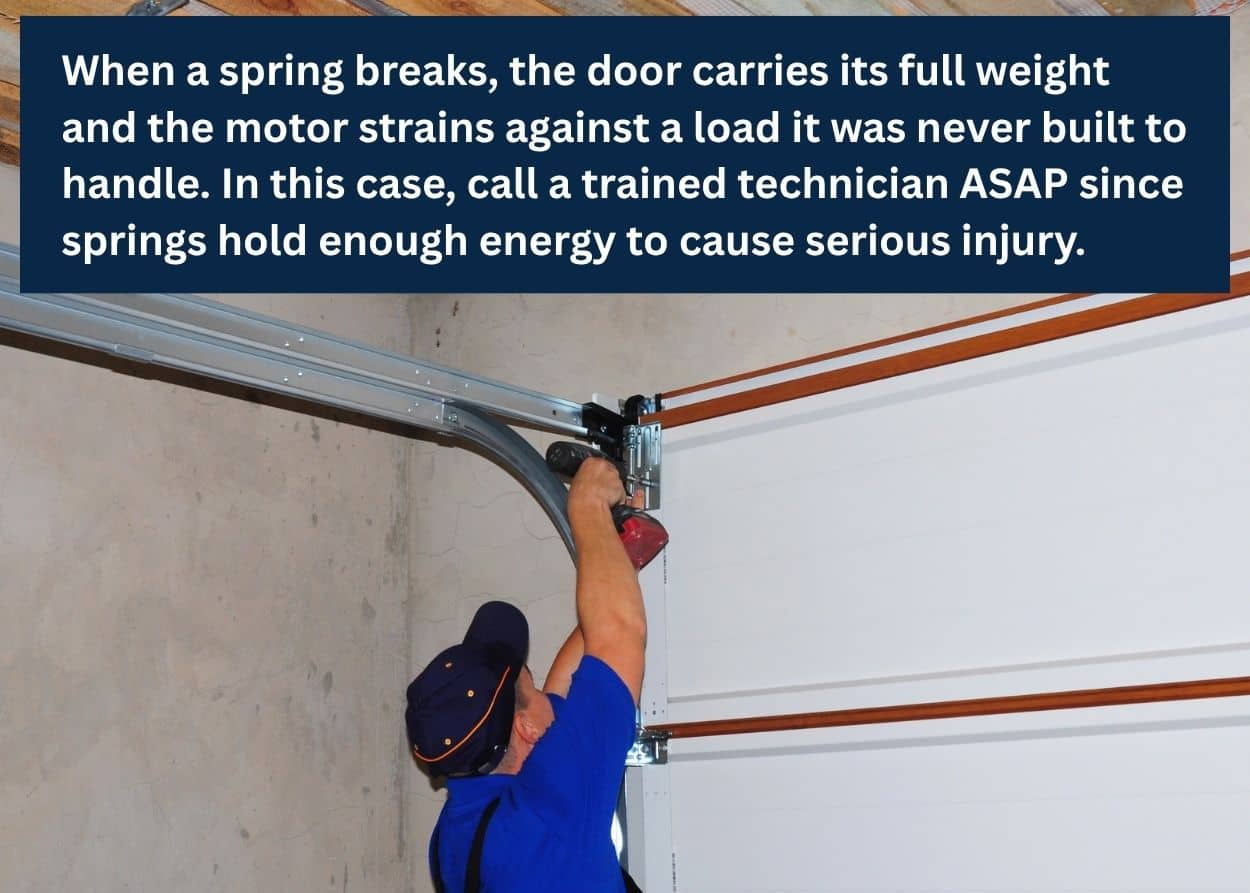
Read this one carefully. When a spring breaks, your door suddenly carries its full weight, which is far more than the motor was ever built to lift. It strains, hums, and goes nowhere.
The clue: You heard a loud bang from the garage recently, sometimes overnight. A visible gap in the spring coils means it’s broken. Check the thin steel cables on each side for fraying or slack.
The fix: Not a do-it-yourself job. Stop using the opener. Springs hold enough energy to cause serious injury, so only trained technicians should work on them. Running the opener against a broken spring is also what destroys that plastic gear next.
5. The door is locked or stuck in its tracks
Many doors have a manual slide lock, a metal bar on the inside that slides into a slot on the track. If someone flipped it, the opener is pulling against a bolted door. Tracks also bend, rollers come loose, and doors shift out of alignment enough to bind.
The clue: The door shudders or looks crooked.
The fix: If it's the slide lock, flip it open and try again. Bent tracks and loose rollers need a technician. Never force a door that has come off its track.
6. The trolley or door arm connection failed
Sometimes everything works and is simply no longer attached. The trolley can crack, or the bolt holding the metal door arm can shear off.
The clue: The rail parts move normally, but none of it reaches the door.
The fix: This one needs a technician. The trolley or the door arm has to be replaced, and the door needs to be supported while it's disconnected so it can't drop.
3 Safe Checks You Can Do in 5 Minutes
These are safe for anyone, and they tell a technician a lot before he arrives.
- Watch the trolley. Have someone press the wall button while you watch the rail from a safe distance. A moving trolley with a still door points to a disconnected door arm. Nothing moving points to the gear, chain, or belt.
- Test the balance, but only do this with the door all the way down. Your opener is what holds the door up. Pulling the release cord removes that support, and if a spring is already broken, the door can slam to the floor. A closed door has nowhere to fall. So close it fully, pull the cord, then lift the door by hand. A healthy door moves easily and stays put when raised 3 to 4 feet. If it feels heavy or slams back down, you have a spring or cable problem. The CPSC recommends having a professional service an unbalanced door.
- Listen. Grinding usually means a worn gear. A deep strain means the door is too heavy. A normal sound with a sliding trolley means a disconnected door.
Please do not: keep pressing the button hoping it catches, force the door, or open the motor housing while it is plugged in. Our guide on what is safe to do yourself and what is not covers this.
4 Signs to Stop and Call Us Today
Some problems can wait a day. These can’t.
- A loud bang came from the garage before the door quit
- You can see a gap in a spring coil or a frayed cable
- The door sits crooked, is off its track, or hangs lower on one side
- You smell burning or see smoke near the opener
If you notice any of these, stop using the door and schedule service. A door in this shape is not safe to operate, and we offer emergency service.
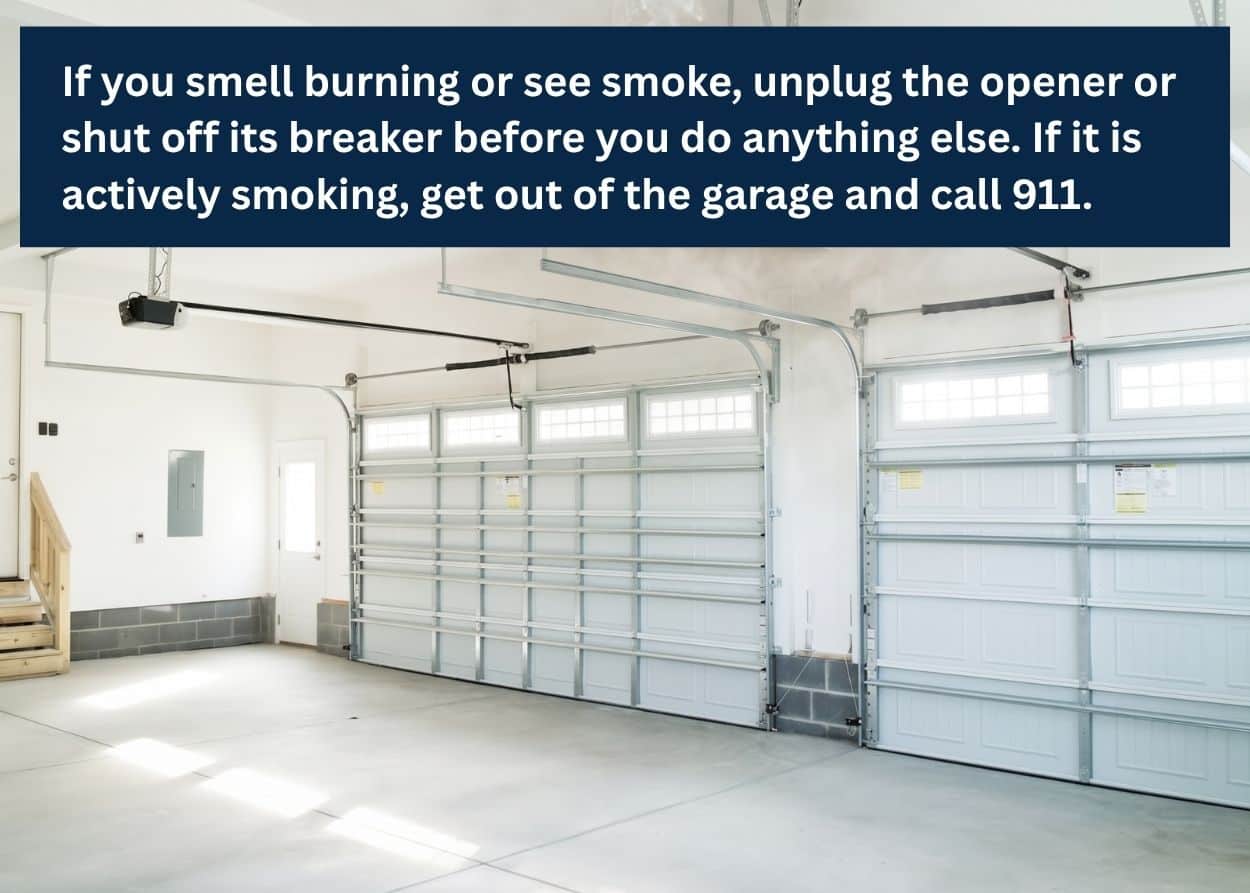
One exception. If you smell burning or see smoke, unplug the opener or shut off its breaker before you do anything else. If it is actively smoking, get out of the garage and call 911.
Your Door Should Just Work
Tomorrow morning, you press one button, the door glides up quietly on the first try, and you back out without thinking about it. That is how a properly repaired door operates.
How do you get there?
- Run the three checks above
- If you see a broken spring, frayed cable, or crooked door, stop using the opener
- Schedule your service appointment or call 717-933-4134
When we come out, we check the whole system, not just the failed part. We use our own crews, never subcontractors, and back the work with a 100% satisfaction guarantee. Our DoorGuard Service Plans catch problems early.
Shank Door has served Myerstown, Lancaster, Lebanon, Reading, Harrisburg, York, and surrounding communities for more than 60 years. We would be glad to get your door working again.